Allergen labeling isn't part of the Nutrition Facts panel. It sits next to the ingredient list. It's also one of the most important things on your package, and one of the most common reasons for food recalls. Two federal laws set the rules:
- The Food Allergen Labeling and Consumer Protection Act (FALCPA), passed in 2004 and in effect since January 1, 2006, defined the "major food allergens" and how to declare them.
- The FASTER Act, signed in April 2021, added sesame as the ninth major allergen, effective January 1, 2023.
These requirements apply to almost every packaged FDA-regulated food, including foods that are exempt from Nutrition Facts.
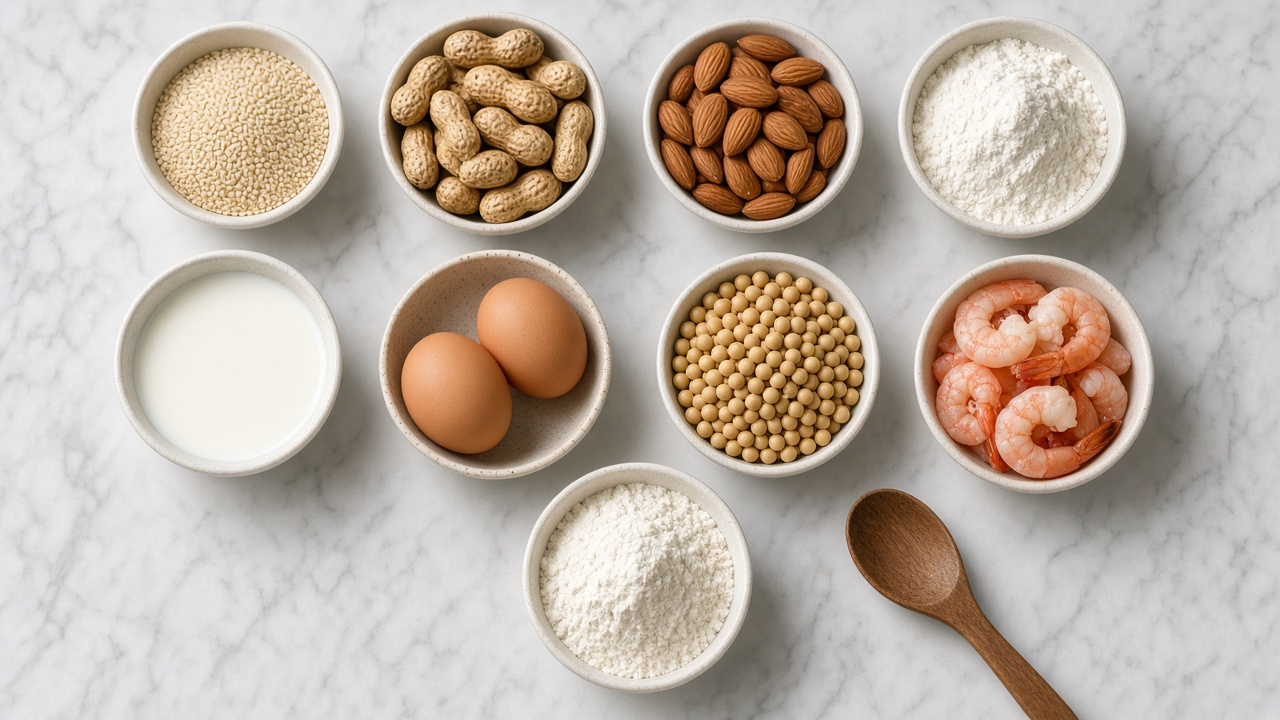
The nine major food allergens
- Milk
- Eggs
- Fish, such as bass, flounder, or cod
- Crustacean shellfish, such as crab, lobster, or shrimp
- Tree nuts, such as almonds, walnuts, or pecans
- Peanuts
- Wheat
- Soybeans
- Sesame
The law also covers any ingredient that contains protein derived from one of these, such as whey (milk), albumin (egg), or semolina (wheat).
Molluscan shellfish, such as clams, oysters, and scallops, aren't major allergens under federal law. Highly refined oils made from a major allergen are exempt from the definition.
Where allergen information goes
FALCPA gives you two ways to declare an allergen. You can use either one, or both.
Option 1: inside the ingredient list
Name the allergen source in parentheses after the ingredient, unless the ingredient name already makes it obvious:
> Ingredients: Enriched flour (wheat flour, niacin, reduced iron, thiamine mononitrate, riboflavin, folic acid), sugar, butter (milk), whey (milk), eggs, tahini (sesame), salt.
"Butter" by itself isn't enough. "Eggs" is. If you declare allergens this way, every one must be identified in the list.
Option 2: the "Contains" statement
Add a statement immediately after or next to the ingredient list:
> Contains: wheat, milk, eggs, sesame.
The "Contains" statement must list every major allergen in the food. It must be printed in a type size no smaller than the ingredient list. If you use it, it has to be complete. You can't name some allergens in the ingredient list and others only in the "Contains" line.
Most small producers find the "Contains" statement easier to scan. It's the format most state cottage food guides show in their examples.
Naming the specific tree nut, fish and shellfish
"Tree nuts", "fish", and "shellfish" aren't acceptable on their own. You must name the species:
- "Contains: almonds, pecans", not "Contains: tree nuts"
- "Contains: cod (fish)" or simply "cod"
- "Contains: shrimp", not "shellfish"
Hidden sources: flavors, colors and processing aids
FALCPA applies to allergens in flavorings, colorings, and incidental additives too. If your "natural flavor" contains milk protein, or a release agent contains soy, that allergen must be declared. Ask your suppliers for allergen statements, and keep them on file. This is where many small producers get caught out.
Sesame: the newest allergen
Sesame has been a major allergen since January 1, 2023. Watch for it in:
- Tahini, halva, and hummus
- Sesame oil, unless it's highly refined
- "Everything" seasoning and seeded bread toppings
- Some spice blends
Before the FASTER Act, sesame could be hidden under "spices" or "natural flavors". Now it must be declared by name.
FDA has noted that some manufacturers responded by adding sesame to products and labeling it, rather than controlling cross-contact. That's legal, but it reduces choices for people with sesame allergies.
"May contain" statements
Precautionary labels such as "May contain peanuts" or "Made in a facility that also processes tree nuts" are voluntary. FALCPA doesn't regulate them. FDA says they must be truthful and not misleading, and they're no substitute for good manufacturing practices. Use them only when there's a real risk of cross-contact you can't control. Never use one to "cover" an allergen that's actually an ingredient. That allergen must be declared.
Many cottage food laws include allergen language in the required disclaimer. Illinois's label sentence says the kitchen "may also process common food allergens", for example. That state statement is in addition to the federal declaration, not a replacement for it. See your state guide.
FDA's 2025 guidance update
In January 2025, FDA finalized Edition 5 of its guidance, Questions and Answers Regarding Food Allergens. Key changes:
- Tree nuts are now a shorter list of 12 nuts. Coconut is no longer treated as a major allergen, though it must still appear in the ingredient list.
- "Milk" includes milk from goats, sheep, and other domesticated ruminants. "Eggs" includes eggs from ducks, geese, quail, and other domesticated fowl. Labels should name the source, such as "Contains: goat milk".
If you use coconut, goat milk, or duck eggs, revisit your labels.
Gluten-free claims
"Gluten-free" isn't part of FALCPA. It's a voluntary claim defined in 21 CFR 101.91, and it requires the food to contain less than 20 parts per million of gluten. Wheat must still be declared if present, for example in a gluten-free product made with wheat starch that has been processed to remove gluten.
A quick allergen checklist
- [ ] Review every ingredient and sub-ingredient against the nine allergens.
- [ ] Get supplier allergen statements for flavors, colors, chocolate, sprinkles, and mixes.
- [ ] Choose a declaration style: in the list, a "Contains" statement, or both.
- [ ] Name the specific tree nut, fish species, and crustacean.
- [ ] Re-check whenever you change a supplier or recipe.
- [ ] Add your state's required disclaimer, if any.
Allergens on cottage food and bilingual labels
State cottage food laws don't replace FALCPA. Michigan, Illinois, and North Carolina all point producers to the federal allergen rules in their own guidance. If your label is bilingual, the allergen declaration must appear in both languages, just like the rest of the required information. Our bilingual guide shows a layout that keeps both readable.
What happens if you get it wrong
FDA has said undeclared allergens are a leading cause of food recalls it oversees. A missing "Contains: milk" can mean pulling every unit from the shelves, notifying customers, and, worst of all, making someone seriously ill. FDA treats a food with an undeclared major allergen as misbranded.
Most problems come from three places:
- A recipe change, such as swapping chocolate chips for a brand made with milk, without updating the label
- A supplier change that brings a new allergen into a sub-ingredient
- Shared equipment that lets one product's allergen reach another
A five-minute label review every time you change a recipe or supplier prevents most of them.
Frequently asked questions
What are the nine major food allergens?
Milk, eggs, fish, crustacean shellfish, tree nuts, peanuts, wheat, soybeans, and sesame. Sesame was added by the FASTER Act, effective January 1, 2023.
Do I have to use a "Contains" statement?
No. You can identify allergens in the ingredient list instead. If you use a "Contains" statement, it must list every major allergen in the food.
Is "may contain" required by law?
No. Precautionary allergen statements are voluntary, but they must be truthful and not misleading.
Is coconut a tree nut allergen?
Not under FDA's January 2025 guidance. You must still list coconut in the ingredient statement.