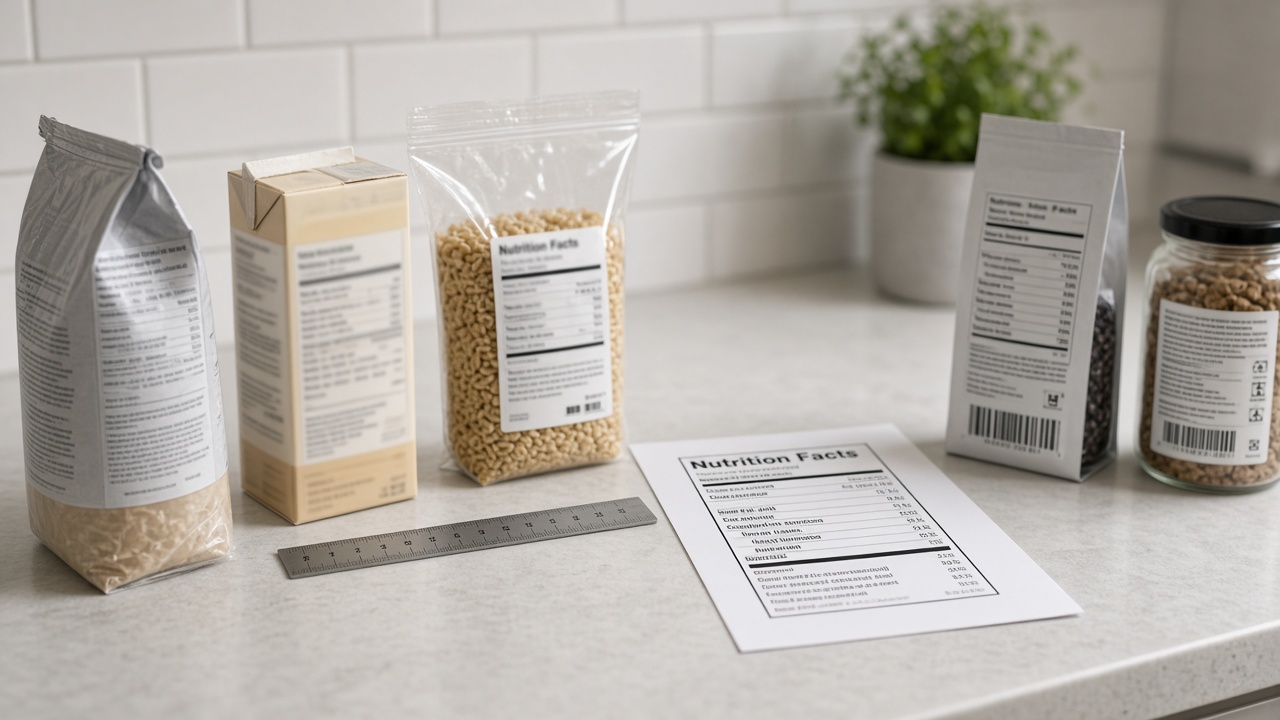

If you sell a small amount of food, you've probably heard you don't need a Nutrition Facts label. That's sometimes true. But "small business" in FDA's rules doesn't mean what most people think. There are actually two separate exemptions, with different tests, and a single word on your packaging can cancel both.
Everything below comes from 21 CFR 101.9(j)(1) and (j)(18), and FDA's small business guidance.
Two exemptions, not one
- The retailer exemption, in (j)(1), is based on how much you sell directly to consumers.
- The low-volume product exemption, in (j)(18), is based on how many people you employ and how many units of one product are sold in the U.S.
You only need to qualify for one of them. They work very differently.
Exemption 1: the retailer sales test
Under 101.9(j)(1), food offered for sale by a person who makes direct sales to consumers, such as a retailer, is exempt if that person has:
- Annual gross sales to consumers of no more than $500,000, or
- Annual gross food sales to consumers of no more than $50,000
Sales are calculated on the most recent two-year average. A new business uses a reasonable estimate.
This test describes the seller. It fits a farm stand, a bakery counter, or a cottage food producer selling direct. It doesn't automatically cover products you sell through another store.
Exemption 2: the low-volume product exemption
Section 101.9(j)(18) covers products from small manufacturers, packers, and distributors, measured product by product. For any 12-month period, a product qualifies if, during the previous 12 months:
- The firm employed fewer than an average of 100 full-time equivalent employees, and
- Fewer than 100,000 units of that product were sold in the United States
"Units" means individual packages, not cases. Each product is counted separately. A different size or flavor of the same product can count as a separate product.
When you must file a notice with FDA
The low-volume exemption usually requires an annual notice to FDA, filed before the exemption period begins. The notice includes your firm's details, average employees, and estimated units for each product. FDA's Office of Nutrition and Food Labeling handles them. You can file online or by mail.
There's a smaller tier with no notice required: firms with fewer than 10 full-time equivalent employees that sell fewer than 10,000 units of the product. This tier doesn't apply to importers; FDA's rule leaves them out.
If your numbers grow past either threshold, the exemption ends. Your labels then need Nutrition Facts.
What cancels the exemption
Both exemptions carry the same condition: the food must bear no nutrition claims or other nutrition information on its label, in its labeling, or in advertising. Under (j)(18), that includes nutrient content claims and health claims.
In practice, any of these would cancel your exemption:
- "Low fat", "low sugar", "sugar-free", "high protein", "good source of fiber"
- "Only 90 calories" or a calorie number on the front
- "Keto-friendly 3 g net carbs", which counts as nutrition information
- A website product page that lists grams of protein
- A "Healthy" claim, which is a regulated term
Gluten-free claims are governed by a separate rule (21 CFR 101.91), so they don't automatically trigger Nutrition Facts. Pairing them with other nutrition information will. If in doubt, leave the claim out, or add the panel.
Exempt doesn't mean label-free
An exemption from Nutrition Facts isn't an exemption from food labeling. Packaged foods still need:
- A statement of identity, meaning the product name
- Net quantity of contents
- An ingredient list in descending order by weight
- The name and place of business of the manufacturer, packer, or distributor
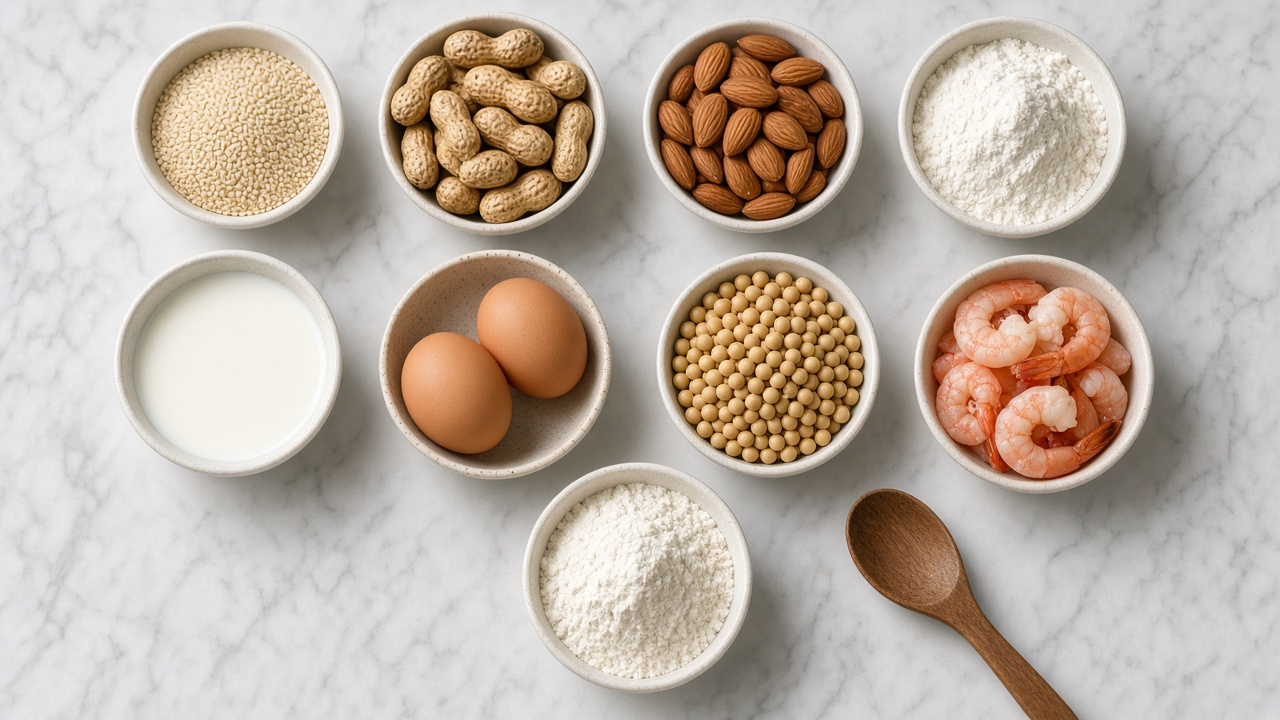
- A major-allergen declaration (see our allergen labeling guide)
States can add their own requirements. Cottage food laws often require a specific home-kitchen disclaimer. Check your state cottage food guide.
When it still makes sense to add a label
Even when you're exempt, there are good reasons to include Nutrition Facts:
- Retailers ask for it. Many grocery buyers won't stock a product without one, whatever its exemption status.
- You plan to grow. If you're likely to pass 100,000 units, designing the panel into your packaging now is cheaper than relabeling later.
- Customers expect it. People managing diabetes, allergies, or diets read labels.
- You want to make claims. "High protein" is a strong selling point. It just requires a panel.
If you add a label voluntarily, it must follow all of 21 CFR 101.9. A partial or "simplified for fun" panel isn't allowed. The simplified format is a defined FDA format, and it works well for many small-batch products.
A quick decision path
- Do you, or will you, make any nutrition claim anywhere? If yes, you need a label.
- Are you selling directly to consumers with sales under $500,000 total, or under $50,000 in food? You're likely exempt under (j)(1).
- Are you a manufacturer with fewer than 100 FTEs, selling fewer than 100,000 units of this product? You're likely exempt under (j)(18), with an annual notice, unless you're under 10 FTEs and 10,000 units.
- None of the above? You need a label.
Three real-world scenarios
A jam maker at two farmers' markets. She sells about $18,000 a year, all directly to customers. She makes no claims. Under the (j)(1) retailer test, she's well under $50,000 in food sales, so no Nutrition Facts panel is needed. She still needs her state's cottage food label, and an allergen declaration if relevant.
A granola brand in 30 independent grocery stores. It has six employees and sells about 8,000 bags a year of its best-selling flavor. It doesn't sell directly to consumers, so (j)(1) doesn't help. It does fit the smallest (j)(18) tier: fewer than 10 FTEs, and fewer than 10,000 units of that product. So it needs no notice for that flavor. But if the bag says "good source of fiber", the exemption is gone.
A café that bakes cookies for a local market. In its own café, the cookies are served for immediate consumption and are exempt under (j)(2). Packaged and sold through someone else's shop, they're judged as packaged food. The café needs either the (j)(18) exemption, with a notice if required, or a label.
Record-keeping tips
Keep a simple yearly file:
- Total sales and food sales to consumers
- Average full-time equivalent employees
- Units sold per product in the U.S.
- Copies of any FDA notices you filed
If a buyer, inspector, or FDA asks why a product has no Nutrition Facts panel, that file is your answer.
Frequently asked questions
What is the FDA small business nutrition labeling exemption?
Two separate exemptions in 21 CFR 101.9(j). One is for sellers with $500,000 or less in total sales to consumers, or $50,000 or less in food sales to consumers. The other is for low-volume products from firms with fewer than 100 full-time equivalent employees selling fewer than 100,000 units.
Do I have to notify FDA to use the small business exemption?
For the low-volume exemption, usually yes, every year. Firms with fewer than 10 FTEs selling fewer than 10,000 units of the product don't need to file. Importers aren't eligible for that smaller tier.
Does saying "low sugar" cancel the exemption?
Yes. Any nutrient content claim, health claim, or other nutrition information on the label or in advertising cancels it.
Do exempt products still need an ingredient list?
Yes. Ingredients, net quantity, the business name and address, and allergen declarations are still required.