Restaurant food is mostly exempt from the Nutrition Facts panel. Chains aren't exempt from menu labeling, though. FDA's menu labeling rule, 21 CFR 101.11, has required calorie counts on chain restaurant menus since May 2018. Here's how it works, and what it means if you're an independent restaurant.
The rule comes from section 4205 of the Affordable Care Act, passed in 2010, which amended the Federal Food, Drug, and Cosmetic Act. FDA finalized it in 2014, and enforcement began on May 7, 2018. It's one of the few federal nutrition rules aimed at food that isn't packaged. It covers what customers see when they order, not what's printed on a box. That's why it uses different tools: calories on the menu, short statements, and full nutrition information on request.
Who is covered
The rule applies to a covered establishment: a restaurant or similar retail food establishment that's part of a chain with 20 or more locations doing business under the same name, offering substantially the same menu items. Ownership doesn't matter, so franchises count.
"Similar retail food establishments" can include grocery and convenience stores with prepared foods, movie theaters, bakeries, coffee shops, and more, if they're part of a chain of 20 or more.
Smaller businesses can voluntarily register with FDA to be covered. Some do this for consistency with state or local rules.
What a covered menu must show
For each standard menu item, the menu or menu board must show:
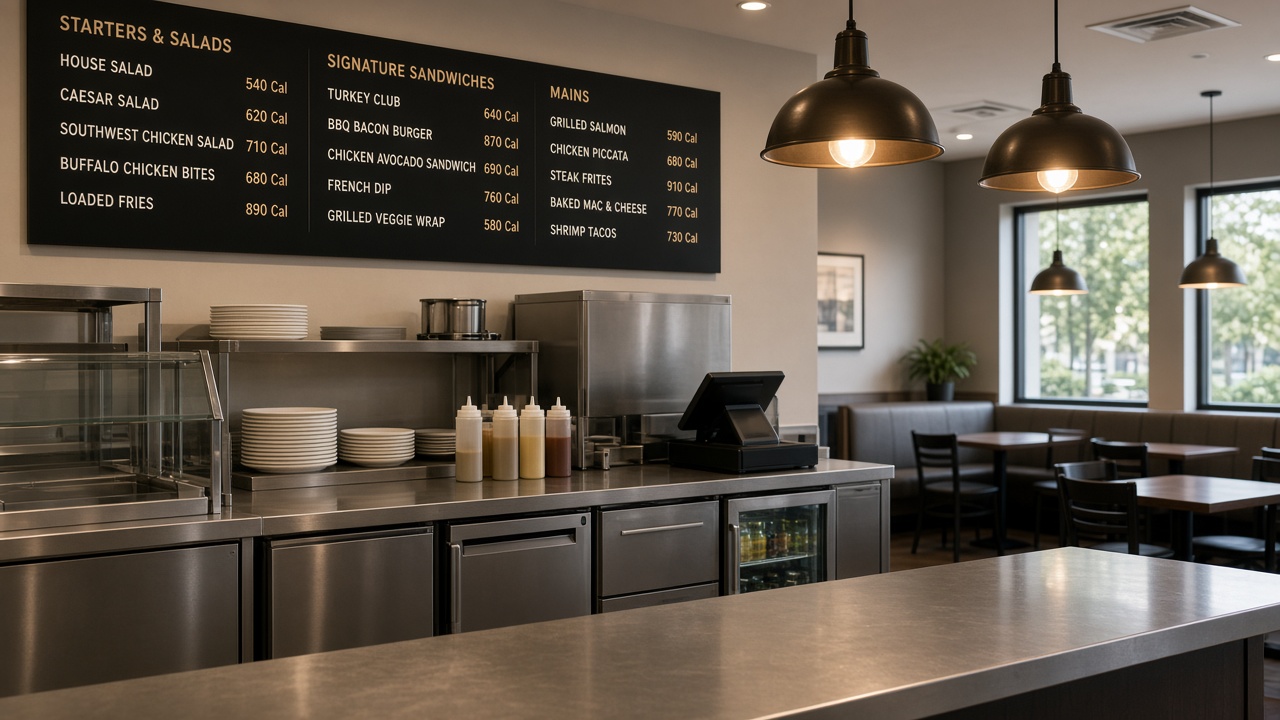
1. Calories, next to the name or price of the item, in type at least as large as the smaller of the two. Use the same color, or one just as conspicuous. Calories are rounded to the nearest 5 up to 50, and the nearest 10 above that. 2. "Calories" or "Cal", either as a column heading or next to each number. 3. The succinct statement: "2,000 calories a day is used for general nutrition advice, but calorie needs vary." Children's menus may use, instead or as well: "1,200 to 1,400 calories a day is used for general nutrition advice for children ages 4 to 8 years, but calorie needs vary." 4. The availability statement: "Additional nutrition information available upon request."
Menu boards, drive-throughs and online menus
"Menu" is broad. It includes breakfast, lunch, dinner, dessert, beverage, and children's menus, plus electronic menus and menus on the internet. Drive-through boards count, and so do online ordering pages. If a customer can order from it, assume it needs calories.
Self-service and foods on display
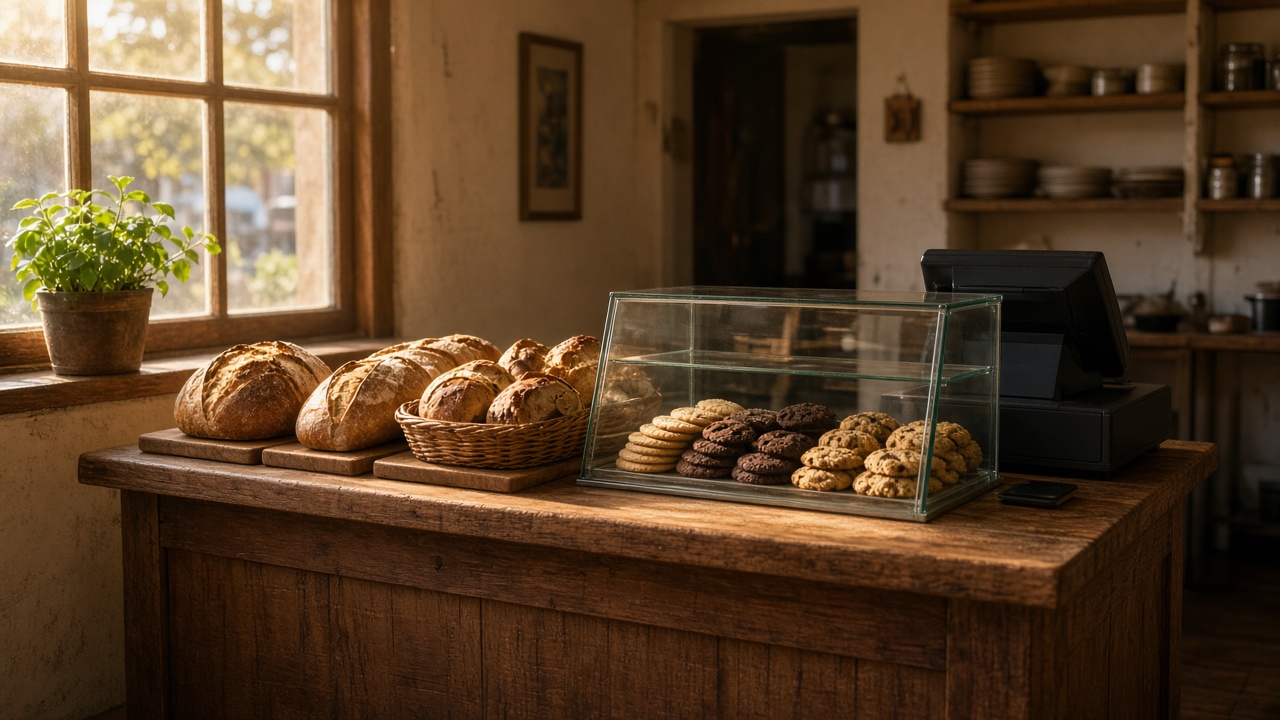
Salad bars, buffets, beverage stations, and foods on display, such as a bakery case, need calorie declarations on a sign adjacent to each item. For a buffet tray, that might mean a small card per dish, showing calories per serving, or per unit for items like cookies.
The written nutrition information
On request, a covered establishment must give customers written nutrition information for each standard menu item, presented in this order:
- Total calories
- Total fat
- Saturated fat
- Trans fat
- Cholesterol
- Sodium
- Total carbohydrates
- Dietary fiber
- Sugars
- Protein
Rounding follows the Nutrition Facts rules in 101.9(c). It can be a binder, a counter card, a poster, or a tablet, as long as it's clear and on the premises.
Combination meals and variable items
- Two options: separate the calorie numbers with a slash, as in "Soft drink 150/250 cal".
- More than two options: use a range, as in "100–250 cal".
- Pizza and other items sold in units: declare per unit, with the number of units, as in "200 cal/slice, 8 slices".
What's exempt
Under 101.11, these don't need calorie declarations:
- Temporary menu items that appear for less than 60 days per calendar year in total
- Customary market tests: items on the menu for less than 90 consecutive days to test consumer acceptance
- Daily specials, custom orders, and condiments for general use
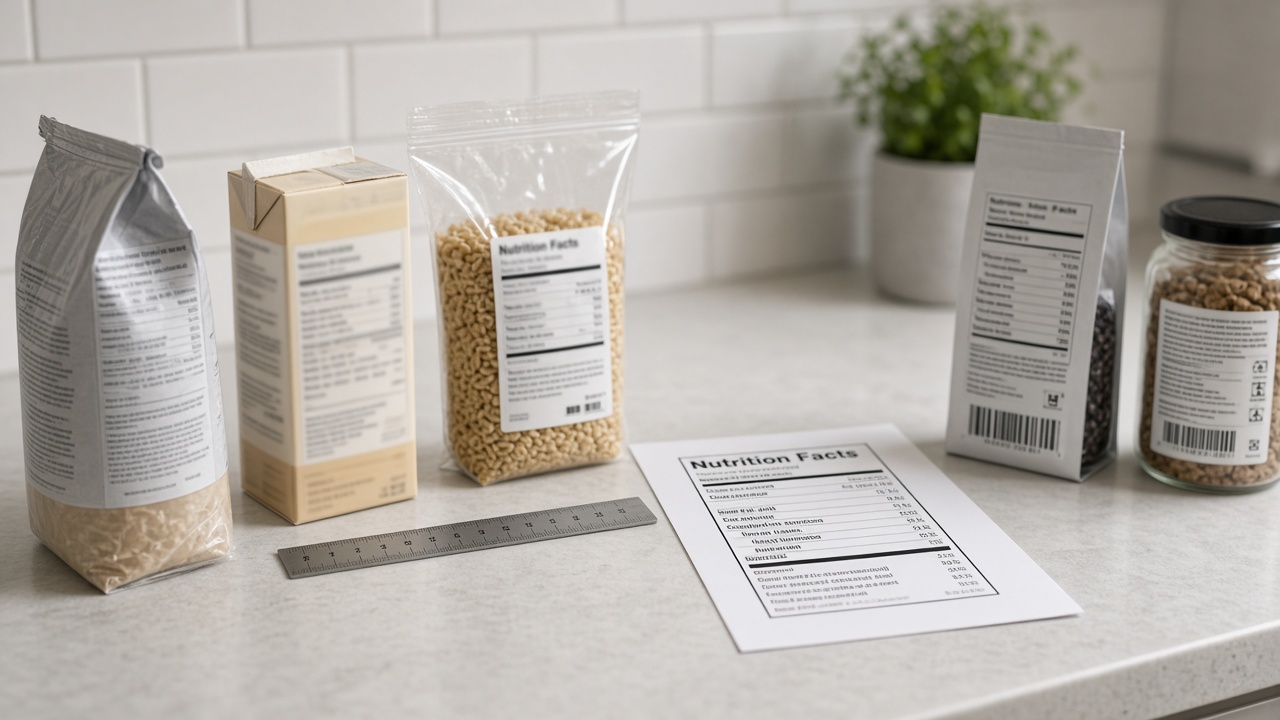
- Foods that aren't restaurant-type foods, such as packaged foods with Nutrition Facts labels
How the calories are determined
FDA requires a reasonable basis for the numbers. Acceptable sources include:
- Nutrient databases
- Cookbooks
- Laboratory analysis
- The Nutrition Facts on packaged ingredients
You must be able to show how you got them. Many chains use recipe-based software calculations, with lab testing for high-volume items. Our software vs lab testing guide compares the approaches.
Small restaurants: what applies to you
If you're an independent restaurant with fewer than 20 locations, and you haven't registered voluntarily:
- The federal menu labeling rule doesn't apply.
- Food served for immediate consumption is generally exempt from Nutrition Facts under 21 CFR 101.9(j)(2), unless you make nutrition claims. A "Heart-healthy" or "Under 500 calories" section on your menu triggers the rules for those items.
- Some state and local governments have their own menu labeling laws, so check locally.
- If you sell packaged products to take home, such as jars of sauce or bags of cookies, those follow the packaged-food rules. That includes the small business exemption, if you qualify.
Alcohol, vending machines and other edge cases
- Alcoholic beverages listed on a covered establishment's menu are standard menu items, and need calorie declarations like any other drink.
- Vending machines have their own rule, at 21 CFR 101.8. It applies to operators that own or operate 20 or more machines.
- Catering and large-order menus can be covered too, if they're a primary writing customers order from at a covered establishment.
A compliance checklist for covered chains
- [ ] Calories next to every standard menu item, on every menu, including online and app menus
- [ ] Calorie numbers in type at least as large as the smaller of the item name or price
- [ ] The succinct statement and the "Additional nutrition information available upon request" statement, both prominent
- [ ] Signs for self-service and display items
- [ ] Written nutrition information on the premises, in the required order
- [ ] A documented reasonable basis for every calorie number
- [ ] Menus updated whenever a recipe or portion changes
Why independent restaurants still keep calorie data
Even when the federal rule doesn't apply, calorie and nutrition data can be useful:
- Catering and corporate clients sometimes ask for it.
- Customers increasingly look for it, especially for "lighter" menu sections.
- Growth: if you plan to franchise, or open more locations, you'll need it eventually.
- State and local rules may already apply where you operate.
If you prepare the data, prepare it the FDA way: rounded under 21 CFR 101.9(c), with a reasonable basis on file. Then it'll be ready if your business grows into the rule. And if you print nutrition claims, such as "low fat" or "under 400 calories", the claim rules apply now.
Frequently asked questions
Do all restaurants have to post calories?
No. FDA's menu labeling rule covers restaurants and similar retail food establishments in chains of 20 or more locations, plus businesses that register voluntarily.
What statement must appear on a chain restaurant menu?
"2,000 calories a day is used for general nutrition advice, but calorie needs vary." and "Additional nutrition information available upon request."
Do online menus need calorie counts?
Yes. Menus on the internet and electronic menus are included in the definition of a menu.
Are daily specials exempt?
Yes. Daily specials, temporary items on the menu for less than 60 days a year, and market tests of less than 90 consecutive days are exempt.