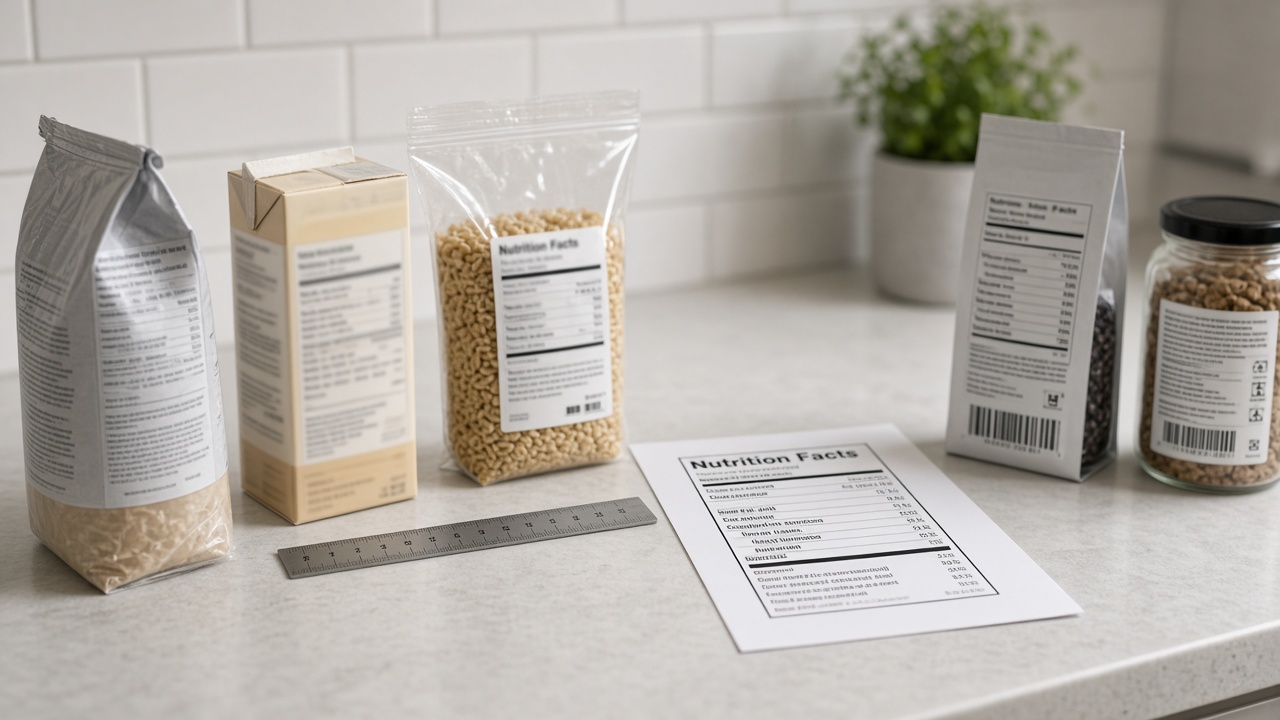
They look similar: a black-ruled box, a list of nutrients, and percent Daily Values. But a Supplement Facts label (21 CFR 101.36) and a Nutrition Facts label (21 CFR 101.9) follow different rules. Using the wrong one is a labeling violation in itself. Here's how to tell which you need, and what's different.
The deciding question: food or dietary supplement?
Under the Dietary Supplement Health and Education Act of 1994 (DSHEA), a dietary supplement is a product taken by mouth that's intended to supplement the diet. It contains one or more "dietary ingredients", such as vitamins, minerals, herbs or other botanicals, amino acids, or certain other substances. It must be labeled as a dietary supplement, and it can't be represented as a conventional food or as the only item of a meal or diet.
If your product is sold and labeled as a dietary supplement, use Supplement Facts. If it's a conventional food, even one with added vitamins, use Nutrition Facts. Dietary supplements are expressly exempt from 101.9 and must follow 101.36 instead.
Gray areas: beverages, powders and bars
The format doesn't decide the category. How you represent the product does:
- Packaging, name, and serving size
- Marketing claims
- Whether it's presented as a drink to quench thirst, or a meal replacement
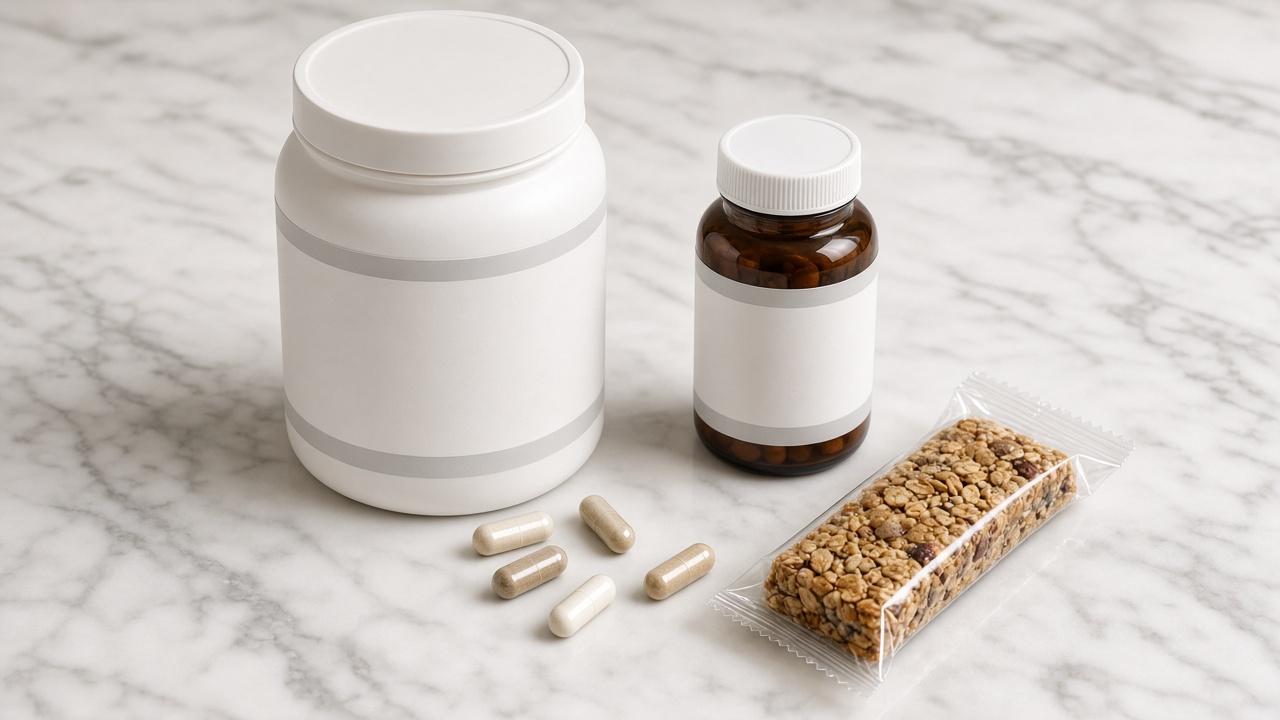
A protein powder marketed as a meal or snack is often a food. A capsule of the same powder marketed to "support muscle recovery" is likely a supplement. Beverages are the most common gray area. FDA's guidance on Distinguishing Liquid Dietary Supplements from Beverages explains the factors. If you're unsure, get regulatory advice before printing.
Key differences at a glance
| Nutrition Facts (101.9) | Supplement Facts (101.36) | |
|---|---|---|
| Title | "Nutrition Facts" | "Supplement Facts" |
| Serving size | Based on the RACC table | Based on the maximum amount recommended on the label for one eating occasion, in units like tablets, capsules, or scoops |
| Required nutrients with zero amounts | Most are listed even at 0 | Not listed if zero or near zero |
| Non-nutrient ingredients (e.g., herbs) | Not listed in the panel | Listed in the panel, with amount per serving |
| %DV not set | No symbol needed | Marked with a symbol, plus "Daily Value not established" |
| Plant part | Not required | Required for botanicals |
| Proprietary blends | Not applicable | Allowed, with total blend weight |
| Ingredient list | Separate statement | Source ingredients can appear in the panel. "Other ingredients" go below it. |
Serving size and "Amount per serving"
Supplement Facts begin with "Serving Size", expressed in the product's form, such as "1 Tablet", "2 Capsules", or "1 Scoop (10 g)". "Servings per container" follows. Then comes an "Amount Per Serving" column, and a "% Daily Value" column where values exist. There's no RACC lookup. The serving is based on the label's recommended use.
What gets listed, and what doesn't
On Supplement Facts, the familiar nutrients, such as calories, fat, sodium, carbohydrate, sugars, protein, vitamin D, calcium, iron, and potassium, are listed only when present in more than an amount that can be declared as zero. A vitamin capsule doesn't show "Total Fat 0 g". Vitamins and minerals are listed in the order 101.36 sets out, by amount and %DV.
Other dietary ingredients without a Daily Value, such as ashwagandha, fish oil, or creatine, are listed below the nutrients. Each shows its amount per serving and a symbol (usually †) pointing to the footnote "Daily Value not established."
Botanicals, sources and "Other ingredients"
- Botanicals must name the part of the plant used, as in "Turmeric (root) extract". This follows 101.4.
- Source ingredients, like "calcium (as calcium carbonate)", can appear in the panel.
- Everything else, such as capsules, fillers, flavors, and colors, goes in an "Other ingredients:" statement immediately below the panel. If the panel won't fit there, it goes immediately to the right.
Proprietary blends
Supplements may list a "Proprietary Blend", or another descriptive or fanciful name. Show the total weight of the blend, and list its ingredients in descending order of predominance by weight. You don't have to give the weight of each ingredient in the blend. You do have to list vitamins and minerals with a Daily Value separately, by amount and %DV.
Claims and the required disclaimer
Supplements can make structure/function claims, such as "supports joint health". These must be truthful. They also require the FDA disclaimer (21 CFR 101.93):
> "This statement has not been evaluated by the Food and Drug Administration. This product is not intended to diagnose, treat, cure, or prevent any disease."
You also need to notify FDA within 30 days of first marketing the claim. Disease claims, such as "treats arthritis", are not allowed on either kind of label.
Making the right label
If your product is a supplement, our Supplement Facts format sets up the title, serving units, "Daily Value not established" footnote, and blend layout. If it's a food, start with the standard vertical Nutrition Facts label. If you sell in Canada too, note that Canada has its own Nutrition Facts table with different rules.
Switching a product between food and supplement
Brands sometimes reposition a product, such as a functional beverage moving from "supplement" to "drink". That's more than a label swap. You change the panel type, but the serving size basis, the claims allowed, the ingredient permissions, and the required disclaimers all change too. Some ingredients allowed in supplements aren't permitted in conventional foods, and some food claims don't work for supplements. Treat it as a full regulatory review.
Common Supplement Facts mistakes
- Listing "Total Fat 0 g" and other zero-value nutrients, which belong on Nutrition Facts, not Supplement Facts.
- Leaving out the plant part for botanicals.
- Listing a proprietary blend without its total weight.
- Putting fillers and capsule materials inside the panel instead of under "Other ingredients".
- Making a structure/function claim without the FDA disclaimer.
- Using the title "Nutrition Facts" on a product labeled as a dietary supplement.
A quick decision path
- Is the product labeled and marketed as a "dietary supplement"? → Supplement Facts.
- Is it a conventional food or beverage, even if fortified? → Nutrition Facts.
- Is it a liquid or powder that could be either? → Review FDA's beverage guidance, and look at your claims, serving size, and marketing before choosing.
Frequently asked questions
What is the difference between Supplement Facts and Nutrition Facts?
Supplement Facts (21 CFR 101.36) is used on dietary supplements. It lists dietary ingredients like botanicals with amounts per serving, omits zero-value nutrients, and allows proprietary blends. Nutrition Facts (21 CFR 101.9) is used on conventional foods, with RACC-based serving sizes.
Does a protein powder need Supplement Facts or Nutrition Facts?
It depends on how it's represented. Marketed as a food, such as a meal or snack, it uses Nutrition Facts. Labeled and marketed as a dietary supplement, it uses Supplement Facts.
What does "Daily Value not established" mean?
It's the footnote used on Supplement Facts for dietary ingredients that have no FDA Daily Value, such as most herbs and amino acids.
Do supplements need a disclaimer?
Yes, when they make a structure/function claim: "This statement has not been evaluated by the Food and Drug Administration. This product is not intended to diagnose, treat, cure, or prevent any disease."